
“No One Knows About Persian Cats” is a film directed by Bahman Ghobadi, an award-winning Kurdish-Iranian film-maker. Mr Ghobadi first came to prominence with “A Time For Drunken Horses,” a film about smuggling across the Iran-Iraq border.
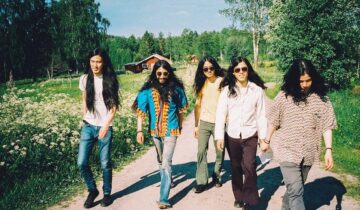
“Persian Cats”, which won the Special Jury Prize in the “Un Certain Regard” section at the 2009 Cannes Film Festival, tells the story of young musicians in Tehran trying to make music under the strict censorship of the Iranian state. The film, whose characters are played by real Tehran musicians, depicts the tiny basements and cow sheds that are their rehearsal rooms, and their difficulties in finding venues where the government will let them give live performances. Drummers muffle their kit with blankets during rehearsals but angry neighbors still cut off the electricity or call the police when the guitars get too loud, stifling a burgeoning music scene.
My full interview, with “No One Knows About Persian Cats” director Bahman Ghobadi, is at the ECONOMIST, and also here on Blogowitz, after the jump.
The Economist: Why did you feel that the story of “No One Knows About Persian Cats” needed to be told?
Bahman Ghobadi: I was in the middle of making another film called
“60 Seconds About Us,” for which I could not get a permit. I tried for two to three years to get a permit and the government kept rejecting me. Because I have always loved music, a friend of mine suggested I go and record my vocal album. So I went to record and I got to know the musicians of the Tehran underground world. I realised a film needs to be made about these artists who have been suppressed by the government, because they had never been seen. I decided to create the Iranian underground cinema just like the Iranian underground music. They gave
me the courage to break the walls of censorship and say what I need to say.
The Economist: So you are a musician as well. What do you play?
BG: I have sang a lot, I know drum instruments, especially Iranian traditional drum instruments. And now, even though I am busy with a few other projects in Kurdistan, Iraq, I am recording my first album.
The Economist: Rather than use professional actors, you chose to hire local Tehran musicians to portray themselves in your movie. Why did you make that decision?
BG: When you make a film about real musicians in real locations, you cannot ask another musician to play the role of another musician. I did not have any choice. These kids go through a lot of tragedies and drama on a day-to-day basis. Just to be able to make music, they are faced with the authorities and with the police who ban their music, take away their instruments, and lash them as punishment.
The Economist: It was reported that you had to flee Iran after the film came out? Is that true?
BG: The Ministry of Information asked me to a famous spot in that ministry called Divar- Sangi (in English: Stone Wall), and very respectfully, they told me if I want to continue with filmmaking, I
have to comply with their standards such as not having interviews with foreign press, and not contacting certain people. They also told me several times that my other option was to leave Iran. So I was forced to leave. I don’t know anymore where to call home. I go back and forth between Kurdistan, Iraq, Berlin, and the United States for making my new film. I certainly have the hope that things improve in Iran soon so that I can return.
The Economist: How dangerous is it to make music in Tehran today? Are things improving or getting worse?
BG: It is more dangerous and more bitter than you think. For instance, [Persian Cats’ two lead characters] Ashkan [Kooshanejad] and Negar [Shaghaghi] had an underground concert in Karaj (suburbs of Tehran), which the authorities invaded and arrested the musicians and all the 400 audience. Ashkan and Negar were thrown in jail, and they were charged with being fire-worshipers and Satan-worshipers just for making this
type of music. Things are currently worsening day after day.
The Economist: How accurately does your film portray the actual music scene in Tehran? Are there really young people wearing Strokes T-shirts and Vans backpacks?
BG: Yes. I have not changed anything in that film; all people are real, all locations and clothes are real. I think of Iranian culture as a beauty veiled by the black ugly chador of politics, and in my film I have tried to unveil this beauty.
The Economist: How do you make films differently now from when you first started?
BG: I have changed a lot. The imprisonment of my friend Roxana Saberi [screenplay writer for “Persian Cats”], the fact that I could not get a permit to make films, that I was forced to leave Iran, and most
importantly getting to know the musicians featured in this film, have really advanced me and my thinking. I see myself as a window-maker who tries to show a less-seen corner of this world. I also believe that Iran’s current situation has changed not only me, but a great number of people.
The Economist: What’s next for you?
BG: I’m busy with filmmaking workshops, writing a script, and producing a film of a young film-maker. I have 2-3 film-making projects in Berlin and Kurdistan that I will start some time this year. It should be done in 2-3 years. I’m basically in search of a place that I can call home.



Wow, the level of stupidity in this site is stnreggiag. For those who can’t tell the difference between Oil and Nuclear Bomb: Nuclear Bombs kill millions, Oil doesn’t do that. Nuclear Bomb will undeniably destabilize the region, but Oil does not jump start an arm race. Plus, under Mossadegh, it was the height of the Cold War and the logic was a lot different. Can’t you seriously tell the difference?!With regards to double standard comment: Iran is the biggest supporter of Terrorism around the globe. It is also the center stage for future conflict in the region. Therefore it would take priority over any other country in the region. At the same time, keep in mind: even though Human Rights are a concern for the News Media, but the focus is on the possibility of hope and of course prevention of armed conflict. It is News, they will cover events that are most important to the people and of course to world politics. They are in a business of News and it is a profit driven business. I have never heard a news group claiming to have promotion of Human Rights as their agenda. They will cover what news readers are more interested about and of course they will give priority based on those preferences… Supply and Demand….DUHHHHHH!!!Seriously man, what’s w/ these stupid comments? Although I do agree with the first comment, it is unlikely that Iranian illegitimate regime would invest energy into investigating and coercing outside activist in order to restore order inside Iran. They have certainly done this before, but it was during the era where Iran was fairly stable. At this point, their main concern is to focus and invest resources on forces within Iran. At least it is a logical thing to do in my opinion.